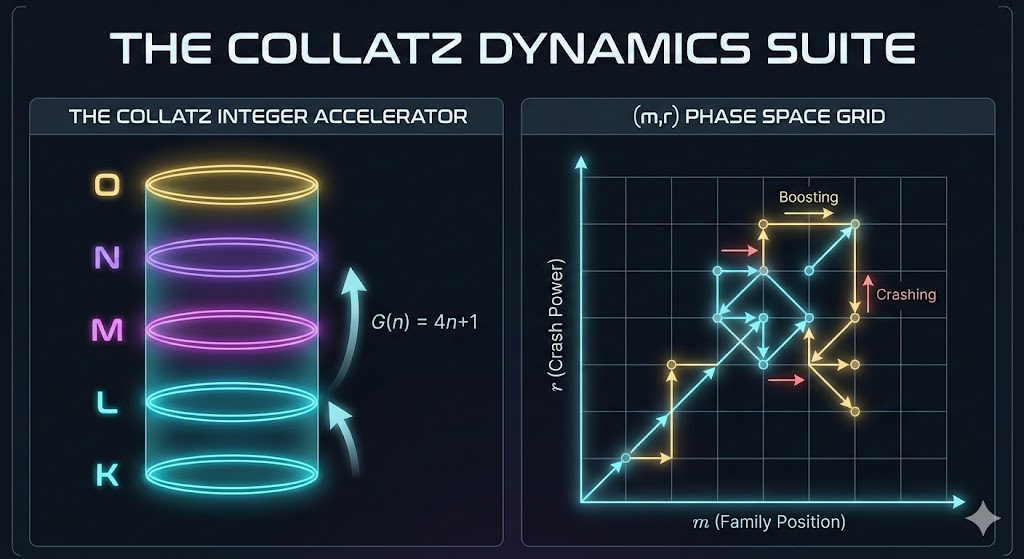





It started in 1996. I was in the final year of my B.Sc., reading a journal called Resonance, when I saw a math problem that looked deceptively simple. It was the Collatz Conjecture.
Five years later, after finishing my Masters in Physics, I was looking for a PhD topic and remembered that old puzzle. I dove back in, trying to crack it. Even though I didn’t solve it—as quoted by Paul Erdos, “Mathematics may not be ready for such problems”—I never really let it go. I still work on it whenever I find time.
Recently, I looked at it from a different angle: What happens in the mirror world of negative integers?
In the past, checking this required tedious manual calculation or learning complex programming. But today, I have a new partner: AI. Using “Vibe Coding” with Gemini, I created a simulation to scan the universe of numbers for me.
What is the Collatz Puzzle?
The rules are simple. Pick any integer n:
- If it is even, divide it by 2.
- If it is odd, multiply it by 3 and add 1.
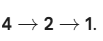
For positive numbers, you always get stuck in the same loop:
The Twist: 4 Loops in the Universe
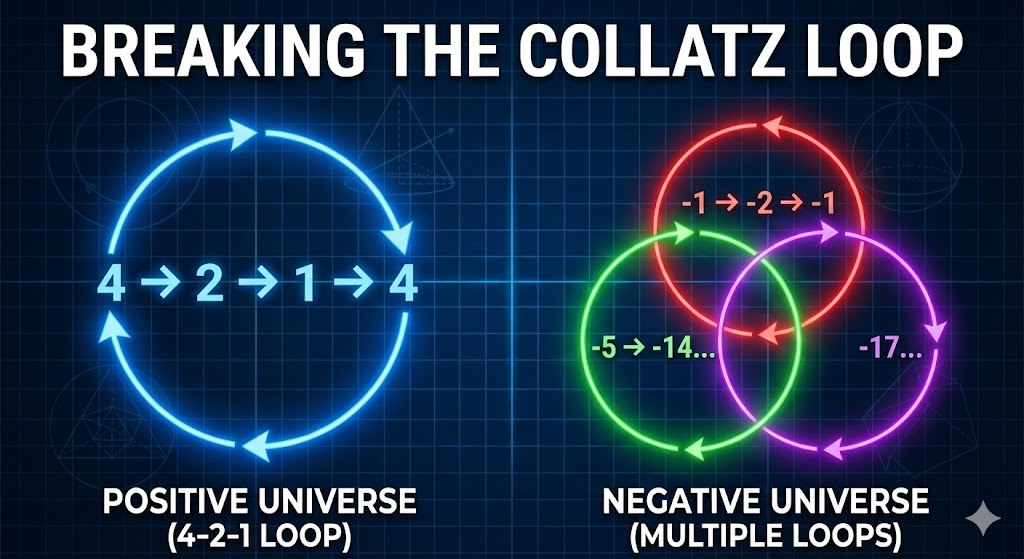
Most people stop at positive numbers. But when I used my AI-generated tool to scan the negative numbers, the picture became much more complex.
My program didn’t just find one loop. It visualized four distinct loops that exist in the integer universe:

A Note on Math vs. Machines
It is important to remember that this method is heuristic. This means we are using computers to search for patterns experimentally. While the computer shows us these loops exist, it is not a formal mathematical proof that only these loops exist. There might be a massive loop hidden somewhere in the billions that we haven’t seen yet.
The Challenge: Can You Find a 5th Loop?
This is where you come in. I have hosted this simulation on my website, Prayogashaala.
You don’t need to code. Just enter a range of numbers (maybe try going deeper into the negatives?) and see if the scanner detects a new, unknown loop.
- Step 1: Go to the link below. https://prayogashaala.com/collatz-loop/
- Step 2: Enter a start and end range (e.g., -1000 to 1000).
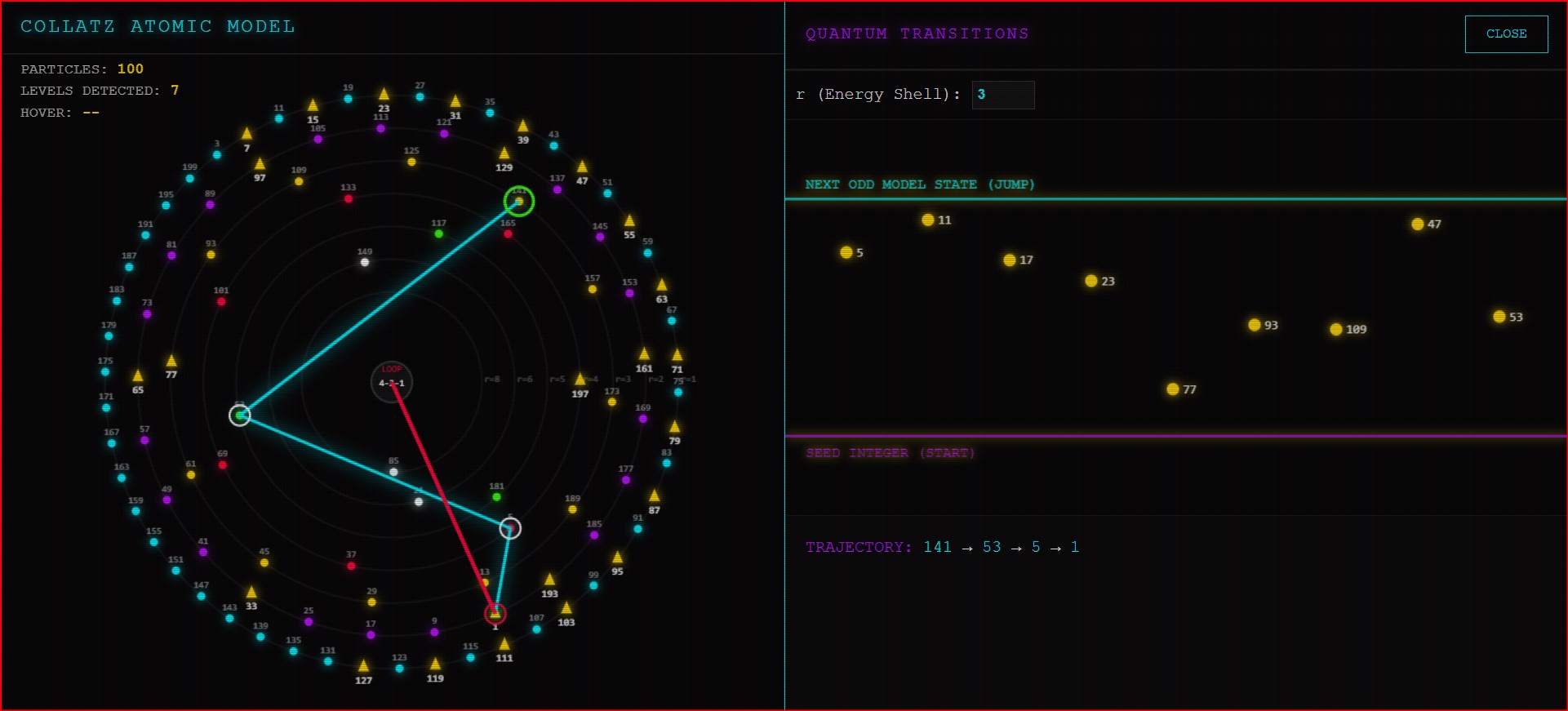
- Step 3: Watch the AI visualize the cycles.
If you find a loop that isn’t on my list of four, you will have found something truly special. Write back to me if you find any.