Prayogashaala (प्रयोगशाला — "the laboratory") is Dr. Rathankar Rao's digital lab: interactive simulations, AI-powered tools and mathematical explorations, built with vibe-coding. Every experiment comes with its story — the prompts, the logic, the failures — so you learn how it works and how it was made.
Each simulation demonstrates a concept — and documents its own creation: the AI prompts used, the construction method, the underlying logic and a user guide. Learn the science, then learn the craft.
Physics, classroom tools, AI utilities or mathematics — choose a category and open any tool. Nothing to install; everything runs in your browser.
Change parameters, make predictions, break things. The simulations are designed around the misconceptions students actually have.
The lab notes reveal the exact prompts, tools and prompting frameworks behind each build — a free course in AI-assisted creation.
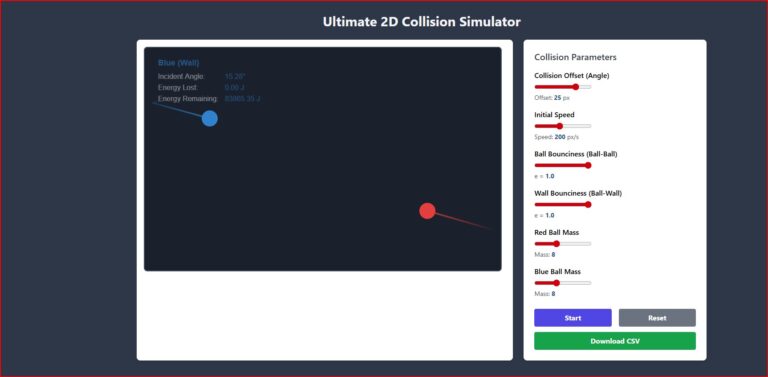
Brachistochrone, projectiles, collisions, Carnot cycle, interference, relativity — 17+ interactive labs.
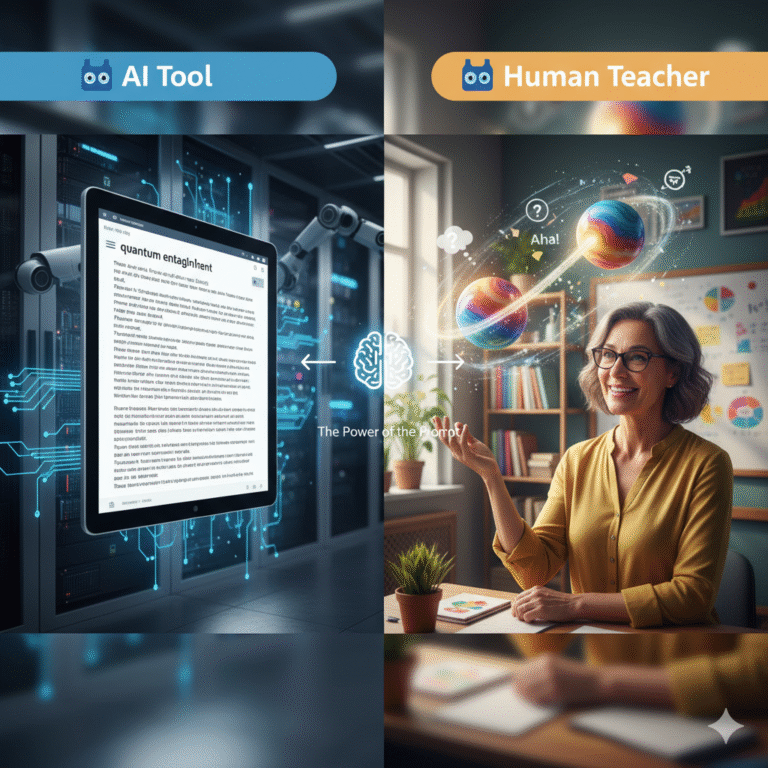
Enter →Visual explainers, quiz generators, goal aligners and activity designers for teachers.
Enter →Physics solvers, idea analyzer, writing coaches, prompt engineering studio and everyday AI utilities.
Enter →Matrix explorer and the eight-part Collatz Conjecture research series — maths as art and mystery.
Enter →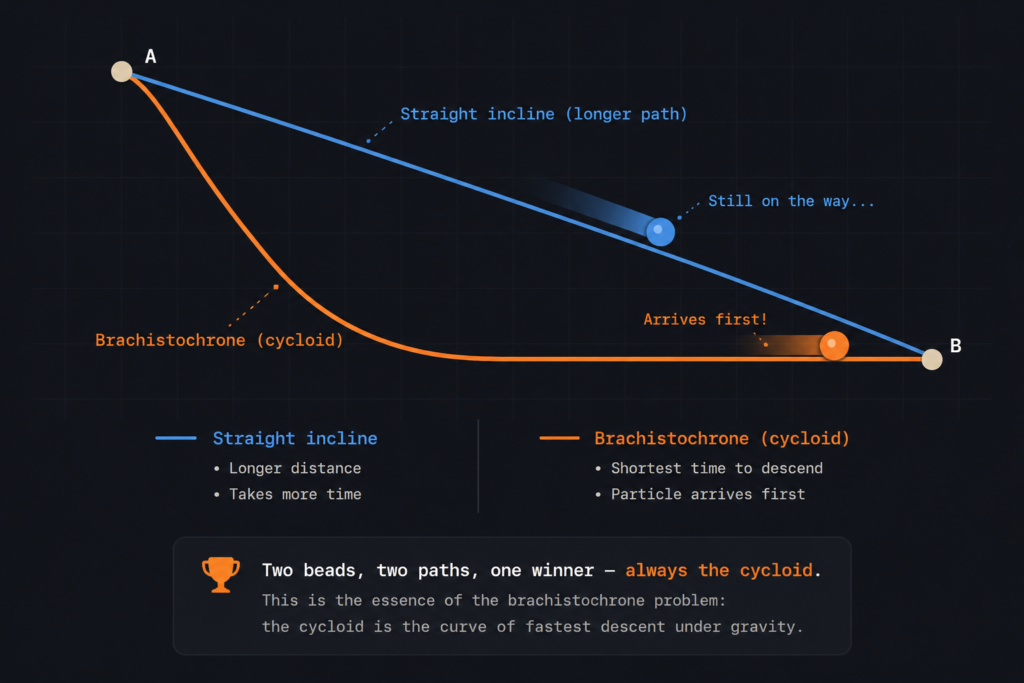
Which track is fastest — straight, circular or cycloid? Race them and find out why the answer shocked Newton's rivals.
Run simulation →
Free fall with data collection — measure g like a real experimentalist, uncertainty analysis included.
Run simulation →
Watch the four strokes of the ideal engine unfold on a live p-V diagram — the simulation that finally makes Carnot click.
Run simulation →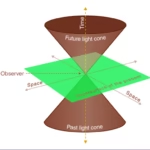
Spacetime diagrams you can drag — see time dilation and simultaneity break in real time.
Run simulation →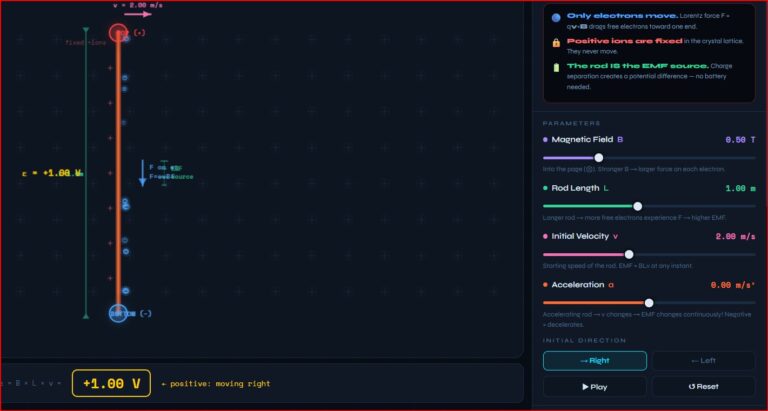
The physics hiding in plain sight — slide a rod through a field and watch the EMF appear.
Run simulation →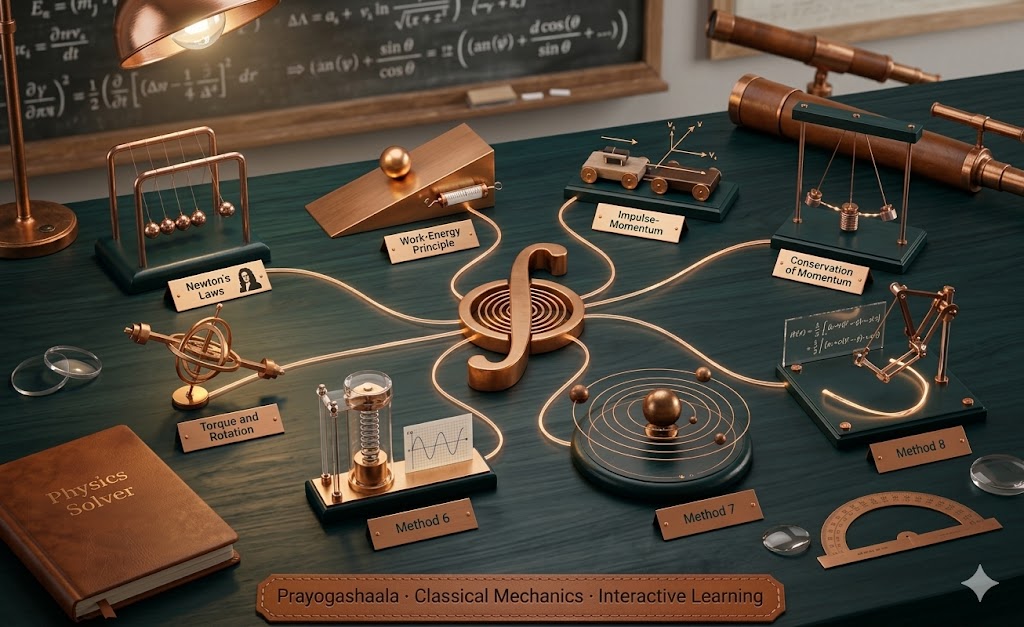
One problem, multiple methods — forces, energy, momentum — solved side by side so you learn to choose the elegant path.
Open solver →Not a physics sim — a four-stage AI companion for students: discover roles that fit you, prove it in a graded case study and interview, then get an honest final recommendation.
Explore your career path →Honest write-ups of how each tool was made — including when the AI scored gibberish 39/50. All lab notes →