



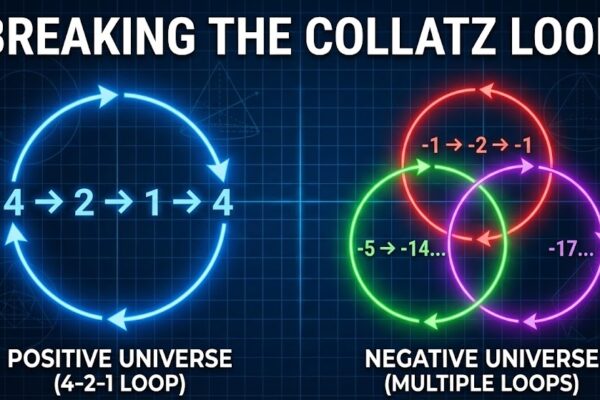
Collatz Conjecture: 1. Breaking the Collatz Loop- A 28-Year Journey with AI
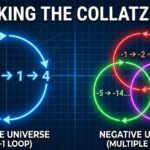
It started in 1996. I was in the final year of my B.Sc., reading a journal called Resonance, when I saw a math problem that looked deceptively simple. It was the Collatz Conjecture. Five years later, after finishing my Masters in Physics, I was looking for a PhD topic and remembered that old puzzle. I…
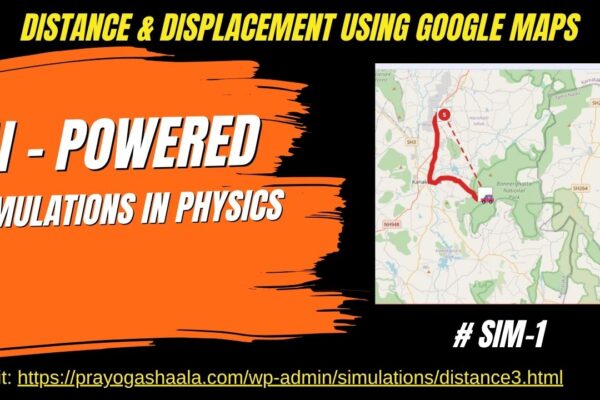
Transforming Physics Education: From Blackboard to Interactive Simulations
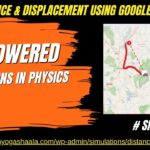
Simulations to find the distance between two points using a google map

My AI Gave a 39/50 Score to Gibberish
We stand at the cusp of a revolution. Artificial Intelligence is no longer a futuristic fantasy; it’s the engine of our present, promising to optimize everything from medical diagnoses to the very code that builds our digital world. But in our rush to embrace this new power, we often forget that we are dealing with…
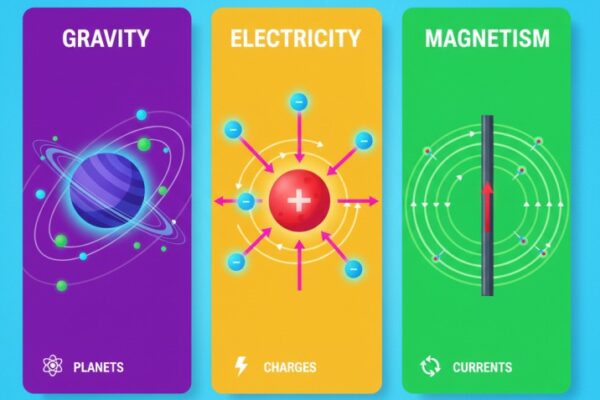
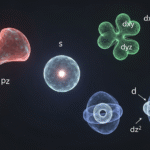
From a Single Formula to a Universe of Analogies: The Story of the Physics Fields Solver
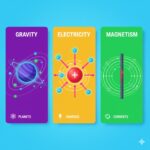
Every student of physics has had that “aha!” moment. It’s the instant you realize that the formula for the gravity of a planet looks suspiciously like the one for the electric field of a particle. You sense a deeper pattern, a hidden unity in the laws of nature. This project began with a simple goal:…
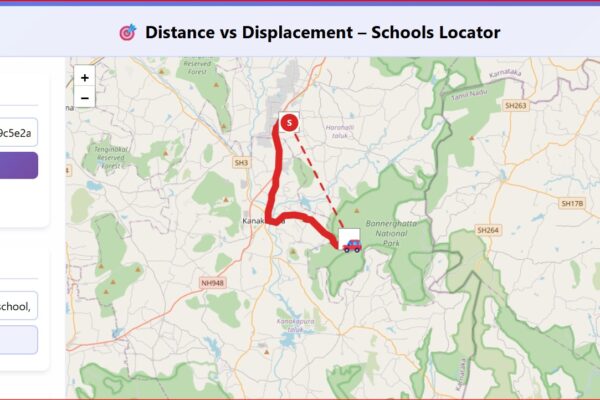
🌍 Distance vs Displacement — A Geo-AI Simulation 🚗📏
1. Simulation Overview 🎯 Click here to Access the Simulation Concept: This app lets you plot a real-road route (distance) and the straight-line shortcut (displacement) between any two points on Earth.Why it matters: Students often treat distance and displacement as synonyms; visualising both on an actual map makes it crystal-clear that distance ≥ displacement and that only vectors…
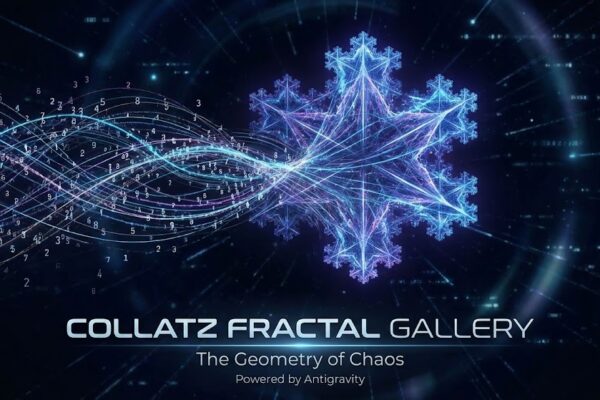
Collatz Conjecture: 3. Fractals in the Noise: Turning Math into Art
In my last few posts, we looked at the “loops” of the Collatz problem. We saw how positive numbers get stuck in the 4-2-1 loop, and how negative numbers have their own hidden loops in a “mirror world.” In the next post, I created an app that displayed how the collatz iterates can be obtained…

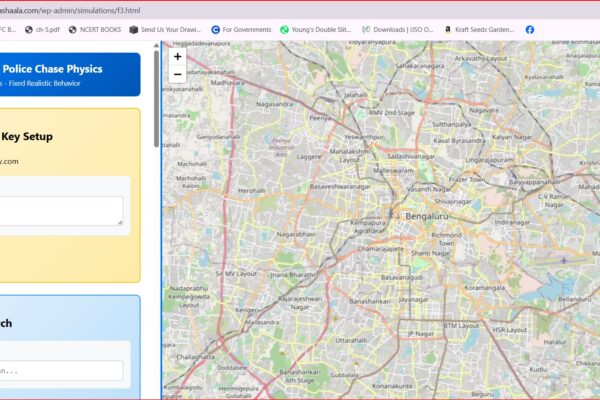
Police-Thief Chase: Physics Simulations
As a physics teacher, I realized my students struggled with basic motion concepts, often thinking that objects need constant pushing to keep moving or that speed and acceleration are the same. To tackle this confusion, I created a police chase game that brings physics to life! Through AI coding, I transformed my ideas into a fun, interactive simulation where students can experiment with physics principles. They can adjust speeds, analyze outcomes, and see first hand how physics applies to real-world situations. Join me on this journey of using technology to enhance learning and engage students in a whole new way!